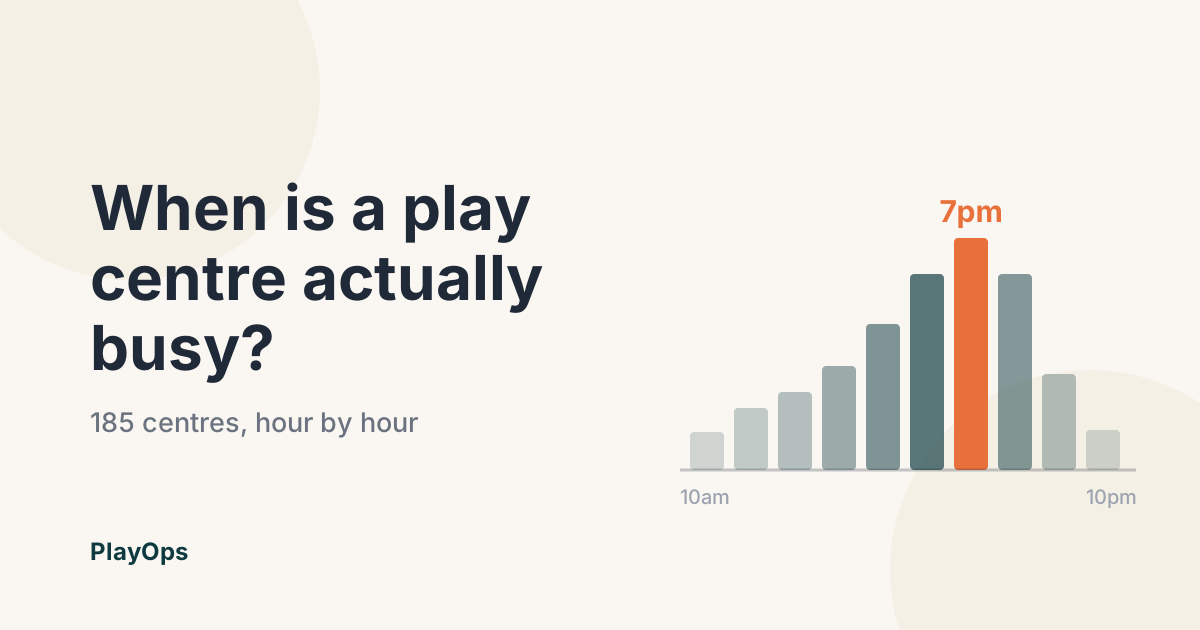
Ask any owner when the floor is busy and you get the same answer: evenings and weekends. Everyone knows this. Almost nobody has seen the actual shape of it — and the shape is where the decisions are.
Google publishes an hour-by-hour busyness estimate for most venues, built from location data. It is sitting on your own listing right now. We pulled it for 185 indoor play centres across South India — mostly Bengaluru, Chennai and the rest of Tamil Nadu, Karnataka and Kerala — and averaged it.
185play centres measured7pmthe peak hour on all seven days2×evening busyness vs morning busynessThe week, hour by hour
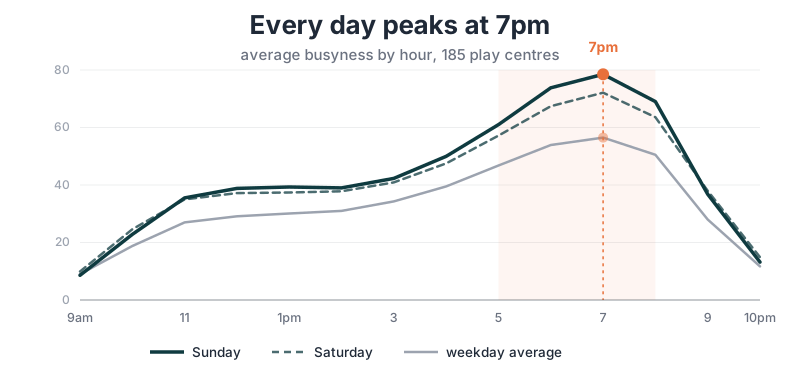
Four things come out of that picture.
One: it is 7pm, not "the evening". Every day of the week peaks at the same hour. Not a broad evening plateau — a point. Monday peaks at 7pm. So does Sunday. If you have ever wondered why the counter feels chaotic at exactly one moment each day, this is why.
Two: Monday is not dead. Sunday's peak is only about 1.4 times Monday's. The week is a slope, not a cliff between weekday and weekend. A Monday evening is roughly three-quarters of a Sunday evening.
Three: the morning is half the evening. On weekdays, the 10am–2pm block averages 26 on this scale while 5pm–9pm averages 52. On weekends it is 34 against 68. The same ratio, both times. Your morning is consistently half as full as your evening — no matter the day.
Four: there is a cliff at 9pm. Weekday busyness goes 56 at 7pm, 50 at 8pm, then falls to 28 by 9pm and 12 by 10pm. The last hour on your board is carrying about a fifth of your peak.
Now compare that to when centres open
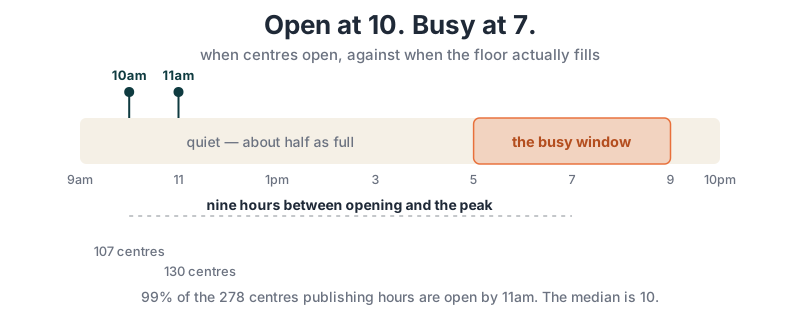
Of the centres in this set that publish their hours, 99% are open by 11am. The median opening time is 10am. More than a hundred of them open at 10 sharp.
So the average centre is open, lit, air-conditioned and staffed for six to seven hours before the hour that matters. The floor at 10am is at about a fifth of what it will be at 7pm.
That is not a mistake. Some of those hours are genuinely needed — toddlers come in the morning, and a closed shutter tells a passing parent you are not a real business. But it does mean the quiet hours are not a problem to be fixed. They are capacity you have already paid for.
What to do with this on Monday morning
Put bookable things in the gap. Birthday parties, school groups, toddler sessions, sensory hours. The 11am–2pm block is where you have room, staff already on shift, and no walk-ins to turn away. A party at 7pm on Sunday costs you the busiest hour of your week — you are selling your best table at your quietest price.
Staff to the curve, not to the clock. If your roster is flat across the day, you are overstaffed at 11am and understaffed at 7pm. The 5pm to 9pm block is where mistakes at the counter turn into queues.
If you discount, discount the morning. A weekday-morning price is selling air you were giving away anyway. A discount at 7pm just charges less for kids who were coming regardless — and every rupee off comes straight out of the day.
Do not close early on Monday. A Monday evening is about three-quarters of a Sunday evening. That is a real trading hour, not a courtesy.
How to read these numbers honestly. Google's busyness is relative to each venue's own peak — 100 means "as full as this place ever gets", not a headcount. So this is a shape, not a footfall figure. Averaging 185 venues gives the shape of the category, and your centre will sit somewhere around it, not exactly on it. The set is South Indian and skews to Bengaluru and Chennai; a mall centre in Delhi may run later. Only centres that show a busyness graph on Google are in the 185, so the smallest centres are missing.
The averages behind both charts, a CSV download and a suggested citation are on the play centre busy hours data page.
The one number worth checking yourself
Open your own Google listing on a phone and look at the popular-times graph. Compare your peak hour to 7pm, and your morning to your evening. If your curve is flatter than the one above, you already have a morning trade most centres do not — that is worth protecting. If it is sharper, your whole business is happening in about four hours a day, and every decision about staffing, pricing and parties should start there.
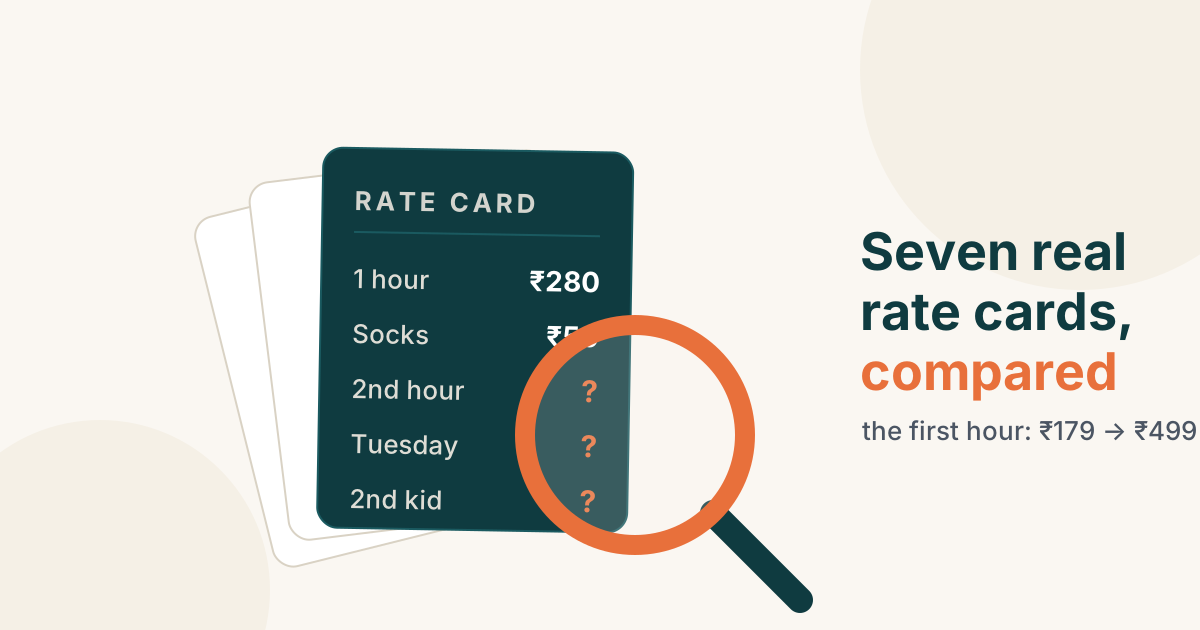
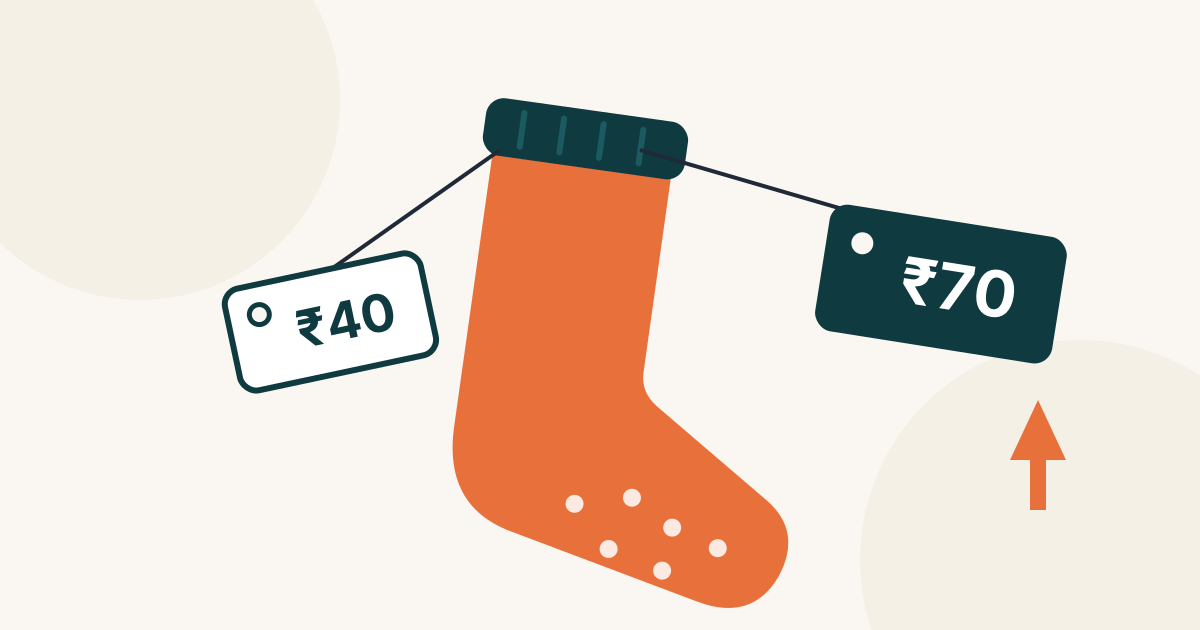
The rate card usually gets the attention. But a card that charges the same at 11am and 7pm is pricing two completely different businesses the same way — which is the same quiet decision we found sitting inside real rate cards.
Where PlayOps fits
The numbers above are Google's estimate of the whole category. The more useful curve is your own, and almost no centre can draw it — because a paper register is never totalled by hour. Nobody sits down on Sunday night and counts how many children came in between 6 and 7.
PlayOps stamps every admit with its time as a by-product of ordinary floor work. Nobody types a time; the desk taps to admit and the record is made. That is the whole reason we can answer a question like this one for a centre without asking anyone to count anything.
Google shows you the shape of the category. Your own admits show the shape of your business — and those are the hours you actually staff, price and open for.