At the front desk of every play centre sits a bin of grip socks. ₹40 or ₹50 a pair, mandatory for the soft-play floor, restocked without a thought. On one floor we work with, that bin quietly produced ₹25,970 in 90 days — most of it margin.
But the money is the least interesting thing about it. We pulled the sock data from two real floors, and it turns out the humble sock is the most honest instrument in the building: it can tell you your pricing power, your new-customer mix, and whether your desk is leaking revenue. Here's what the numbers say.
The natural price test
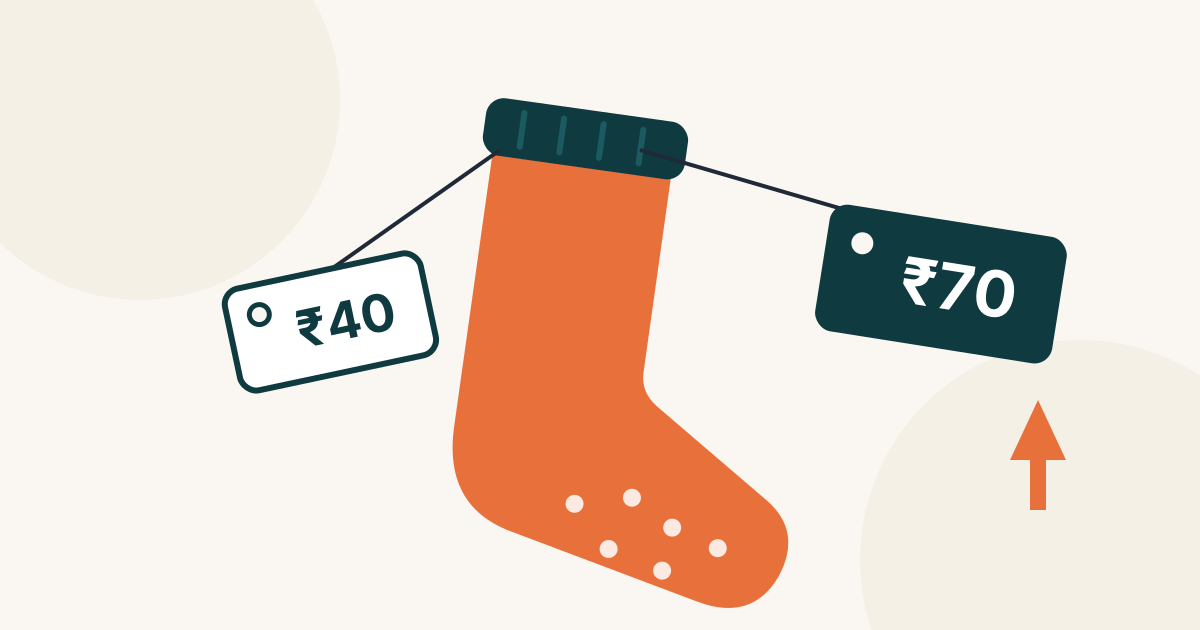
The two floors made this comparison possible almost by accident: both charge ₹280 for the first hour, but one prices socks at ₹40 (14% of the ticket) and the other at ₹70 (25% of the ticket). Same product, same ticket, same kind of family — a 75% price difference.
If socks behaved like normal retail, the ₹70 floor should sell far fewer. Here's what actually happened, over ~1,100 sessions in 90 days:
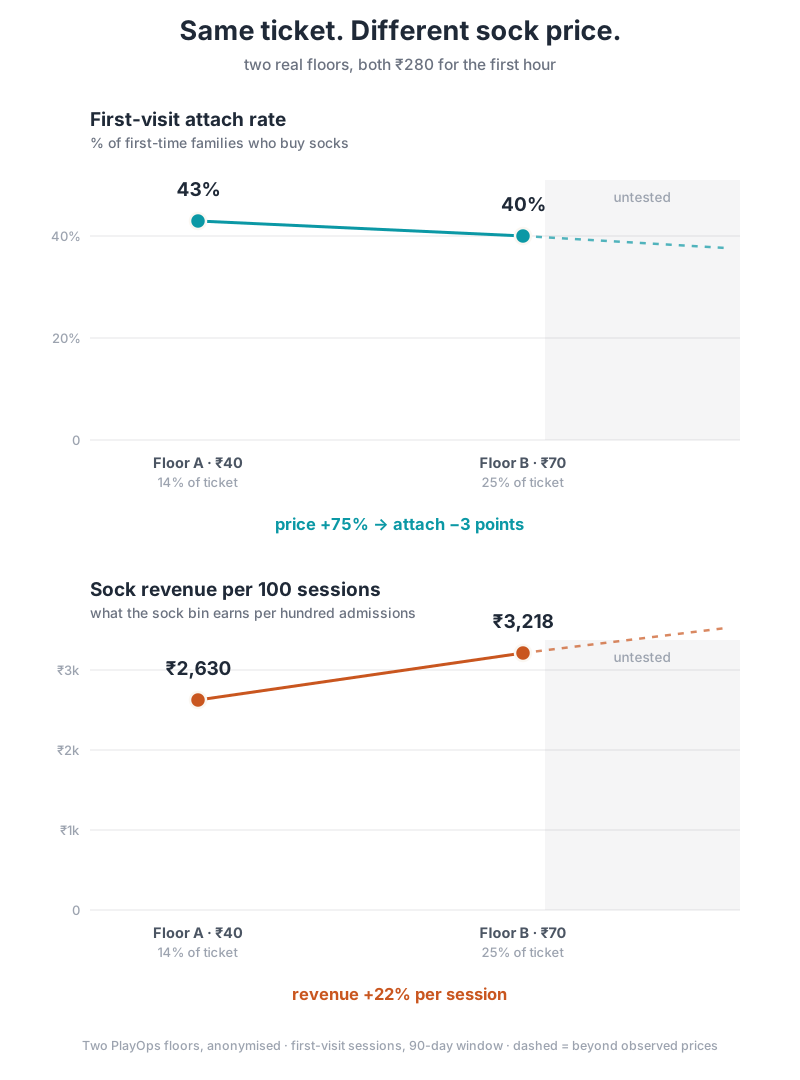
The demand line is nearly flat. On these two floors, a higher sock price barely changed how many families bought socks. It makes sense: a sock is a hygiene rule, bought once, at the door, with the kid already pulling toward the floor. Few parents walk out of a play centre over ₹30, and few compare sock prices.
Honest caveat: this compares two different floors in two cities. It is not a test on one floor, so other things — the city, the families, the desk — may explain part of the gap. The tickets match, the products match, and the sample is about 1,100 real sessions. To be sure for your own floor, the test costs nothing: raise your sock price by ₹10 and watch your own sales for a month.
What this suggests: most centres price socks at 10–15% of the first-hour ticket. On these two floors, 25% did not put families off. That does not prove 25% is right for every centre, so test it on your own floor first. The grey "untested" zone on the chart is a question no floor we know has tried yet.
The sock bin is a first-timer detector
Now the strange finding. We split sock purchases by visit number — first-time families versus returning ones:
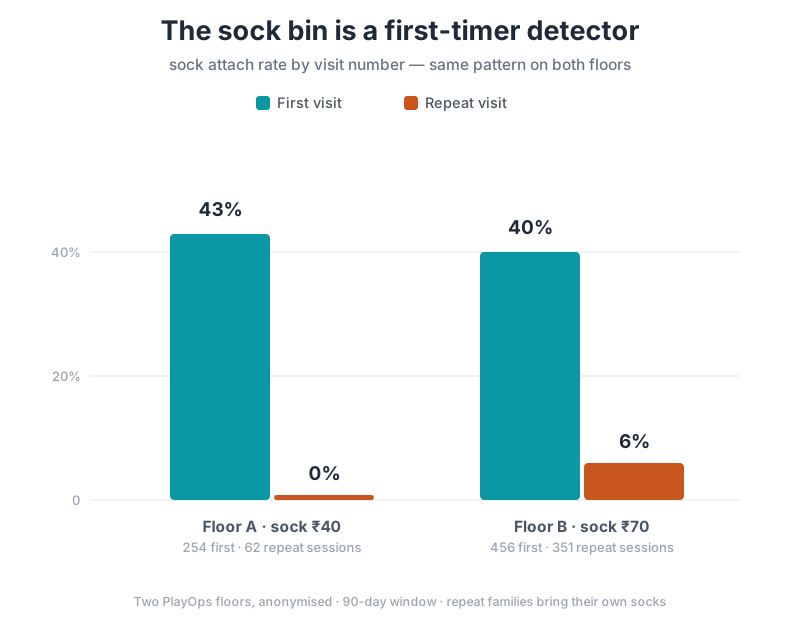
Two floors, different cities, different sock prices — and the same signature: ~40% of first-timers buy socks, and almost no repeat family ever buys again. They keep the pair; next visit, the socks come from the car.
Which means the sock bin is a sensor. If your sock sales are rising relative to admissions, your floor is filling with new families. If they're falling, you're becoming a repeat-heavy centre — great retention or stalling acquisition, and you should find out which. That's your new-vs-returning mix, read straight off the till — a number a paper register cannot produce at any price.
The 60% question
There's a puzzle inside the first-visit number, and it's worth money: socks are mandatory on both floors — so why do only ~40% of first-timers buy?
Some families genuinely bring their own. But the rest of the gap is one of two things: the desk waving people through in the Saturday rush, or sock charges taken in cash and never recorded. On a floor doing 800 admissions a month, every 10 points of unexplained attach gap is roughly ₹5,000/month of fog. You don't need to assume bad faith — you need the number per shift, which turns "I think we charge everyone" into a fact you can check.
One more pattern worth knowing: sock transactions on both floors averaged 1.8–1.9 pairs each. You're rarely selling a sock — you're selling to a family with siblings. Family-sized thinking (a 3-pair pack, a sibling bundle) fits how the product actually sells.
What to do this week
- Reprice. If your sock is under 20% of your first-hour ticket, move it to 20–25%. On the evidence, attach won't move; margin will.
- Watch one number. Sock revenue ÷ admissions, per shift. Same footfall with different sock revenue per shift = a training gap or a leak, found in one glance.
- Sell the pack. A 3-pair pack at a small discount banks margin upfront — and plants "we still have two pairs left" as a reason to come back.
- Read the trend. Attach rising = new families arriving. Attach falling = repeat-heavy floor. Either way, you now know something about your business the register never told you.
Where PlayOps fits
Every number in this post came from ordinary floor operation — no survey, no spreadsheet, no analyst. PlayOps records every sock (and every add-on) against the session it belongs to, with the family, the time, and the shift attached. That's what made "attach rate by visit number" a one-query question — and it's the same recording discipline that priced the birthday playbook in our last post. On paper, this analysis is impossible. On PlayOps, it's just your data, finally visible.
The sock was never about the ₹50. It's proof that on a play-centre floor, even the smallest thing you sell is measuring something — if the sale gets recorded.