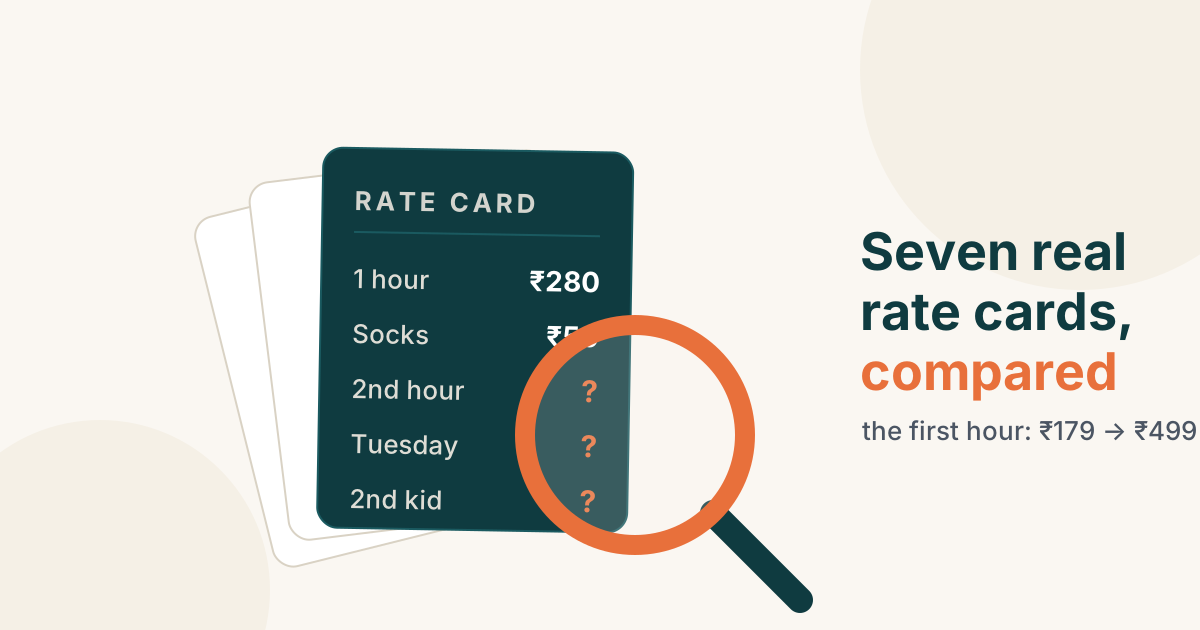
The rate card is the most-read thing a play centre publishes. It hangs at the door, parents photograph it, and every walk-in decision starts there. Yet most cards are not really decided — they are copied from the centre down the road, then never touched again.
We compared real rate cards from centres we work with — different cities, different sizes, names removed. On some things the cards agree. On others, no two cards say the same thing. Those disagreements are the interesting part, because a disagreement means there is a real decision hiding there — one your card may have made for you without asking.
2.8×gap between the cheapest and the dearest first hour₹179–₹499price of the first hour40–100%what the second hour costs, as a share of the firstThe first hour: a 2.8× spread
Every card leads with the same line — one kid, one hour. Here is that line from every card:
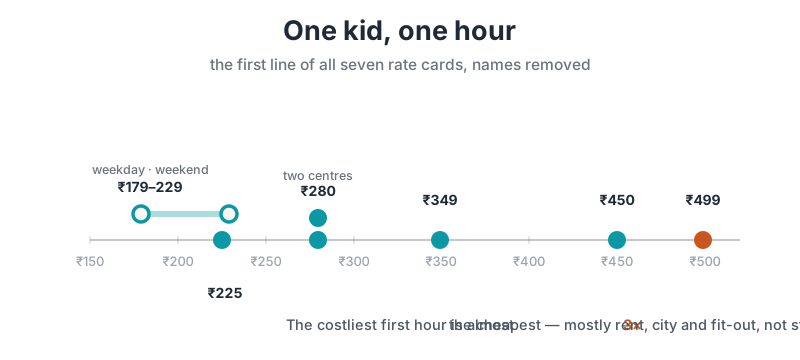
The most expensive first hour is almost three times the cheapest. That sounds dramatic, but it's the least interesting number in this post. The first-hour price mostly reflects rent, city, and fit-out — a premium floor in a metro simply costs more to sit in than a neighbourhood centre. There is no "right" price on this line. The only comparison that matters is with the two or three centres your families actually drive past.
The real decisions are further down the card.
The second hour: where no two cards agree
What does the next hour cost, for a family already inside? This is where the cards split completely:
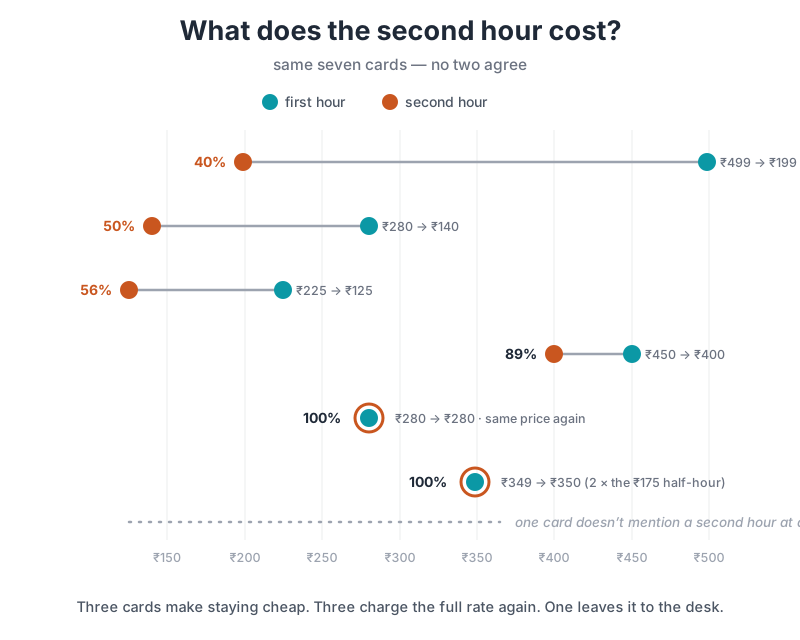
Three camps, on the same question:
- The half-price camp. Some cards sell the second hour at 40–56% of the first. The message to the parent: staying longer is cheap, relax.
- The full-price camp. Others charge (nearly) the same again — 89–100% of the first hour. The message: the clock is the product, and it runs at one rate.
- The silent card. One card doesn't mention a second hour at all. Whatever the desk says in the moment is the price.
Neither camp is wrong. Full price protects revenue on a small, packed floor where a leaving family makes room for a paying one. Half price suits a floor with space to spare, where the extra hour costs you nothing and the family leaves feeling the place was generous.
But notice what the split means: this is a genuine strategy choice, and most owners never made it. The extension price on your card is usually whatever the neighbour's card said in 2019. It deserves five minutes of actual thought: on a normal weekday, is your floor full? If not, your second hour is priced as if it were.
Tuesday at Saturday prices
Only a few cards have any weekday price at all. One prints a weekday hour about 22% below its weekend hour; another sells a weekday-only unlimited pass. The rest charge Saturday's price on a Tuesday afternoon, to a floor that is mostly empty.
An empty Tuesday hour doesn't go into stock. It just expires. A printed weekday price is the simplest tool there is for filling it — and most cards don't have one. (What to actually run on a slow weekday is its own playbook — that post is coming.)
The pass: more than half the cards sell one
More than half the cards sell some kind of bulk deal — a 10-hour pass or a bundle of visits. The discount against the walk-in price ranges from 11% to 30%. The rest have nothing between "one visit" and "birthday party".
We've written before about why a prepaid pass is the best repeat-visit tool a centre has, and why paper is the reason most centres don't sell one — that's the 10-hour pass. The rate cards back it up: the centres selling passes are choosing their regulars deliberately. The rest are leaving repeat business to luck.
And one small echo from the sock post: of the cards with a printed sock price, only one prices socks above 20% of its first hour. In that post, a 25% sock price barely changed sales. Almost every card here is well under it.
Where the card goes quiet
The last finding isn't a price. It's the blank spaces:
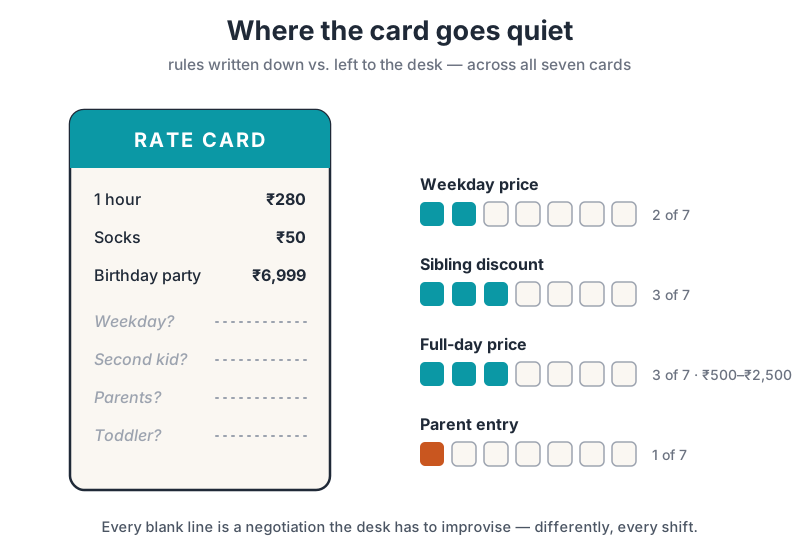
- A sibling discount is written on only some cards.
- A parent entry charge appears on just one card. The rest let any number of adults in free, without saying so.
- A toddler price appears on just one card.
- A full day price appears on only some cards, and among those it runs from ₹500 to ₹2,500 for the same idea.
Every counter argument you've ever had lives in one of these blank spaces. "The other lady gave my second kid a discount." "Last time grandma went in free." When the card is silent, the answer is whoever is on the desk that shift — and two different answers to the same family is how trust leaks.
The fix costs nothing: write the rule down, even when the rule is "no discount". A printed "siblings: ₹25 off" ends the negotiation. So does a printed "one guardian free, extra adults ₹50". Silence doesn't avoid the awkward conversation — it schedules it for the busiest hour of Saturday.
Three questions for your own card
- What does your second hour cost, and why? If the answer is "it's what the old card said" — decide it properly. Full floor: keep it high. Empty floor: print a cheap extension and let families stay.
- Does Tuesday cost the same as Saturday? If yes, you're pricing your emptiest hours like your fullest ones.
- What happens when the card is silent? Read your card as a difficult parent would. Every question it doesn't answer, the desk is answering for you — differently every shift.
Where PlayOps fits
When a centre joins PlayOps, we load its rate card into the system — photos of the standee at the door are enough. Every package, extension, sock and sibling rule becomes a button, so the desk charges the printed price every time, on every shift. That's also why we get to read a lot of rate cards — and why, when you change your second-hour price, you can watch what it does to how long families actually stay. The card stops being a poster and starts being a dial.